The Power of Storytelling
The anxiety was mounting as she retold what had happened. “This young girl was showing them round. She’s been round before. We went out and asked her to let us know when the showing was over and to report any feedback, of course. Well, she didn’t do either and she left the attic light on which we didn’t discover for two days!”
“So, you still haven’t had any feedback?” I ask.
“No! Nothing.”
“Mum, for a house like this, you need someone who can tell its story. It’s a project, a lot of work, so someone has to really love it. And to fall in love with it you need to know its story. You’ve lived here forty years. That’s a long time.
Potential buyers should understand that you thought you’d only be here three years. They need to hear the twists and turns of you not liking it and then deciding to do some work on it and then, falling in love with it. And now you don’t want to leave.
They need to know that I put on my wedding dress in that room on my wedding day. That Jack slept in that room when we brought him back to see his grandparents. Tell them about us playing out on our bikes in the garden on long summer evenings, all the football games, cricket games and dreams, admittedly only mine, of building a swimming pool. That you sat on the bough of that tree and contemplated my sister’s future when she didn’t pass the 11+. That I had lots of friends over for birthdays and the house could put up many, many teens!”
I was emotional at this stage. I don’t even like the house but recounting its history over these 40 years brought tears to my eyes. Wiping my face, I eulogize, “This has been a great family house. It’s time to pass it on to the next family and for a whole new set of memories to be made.”
Storytelling is a powerful tool. In this real-life example (names etc. amended), it could be useful for a realtor or estate agent in the sale of a family home, but it can be useful to businesses too.
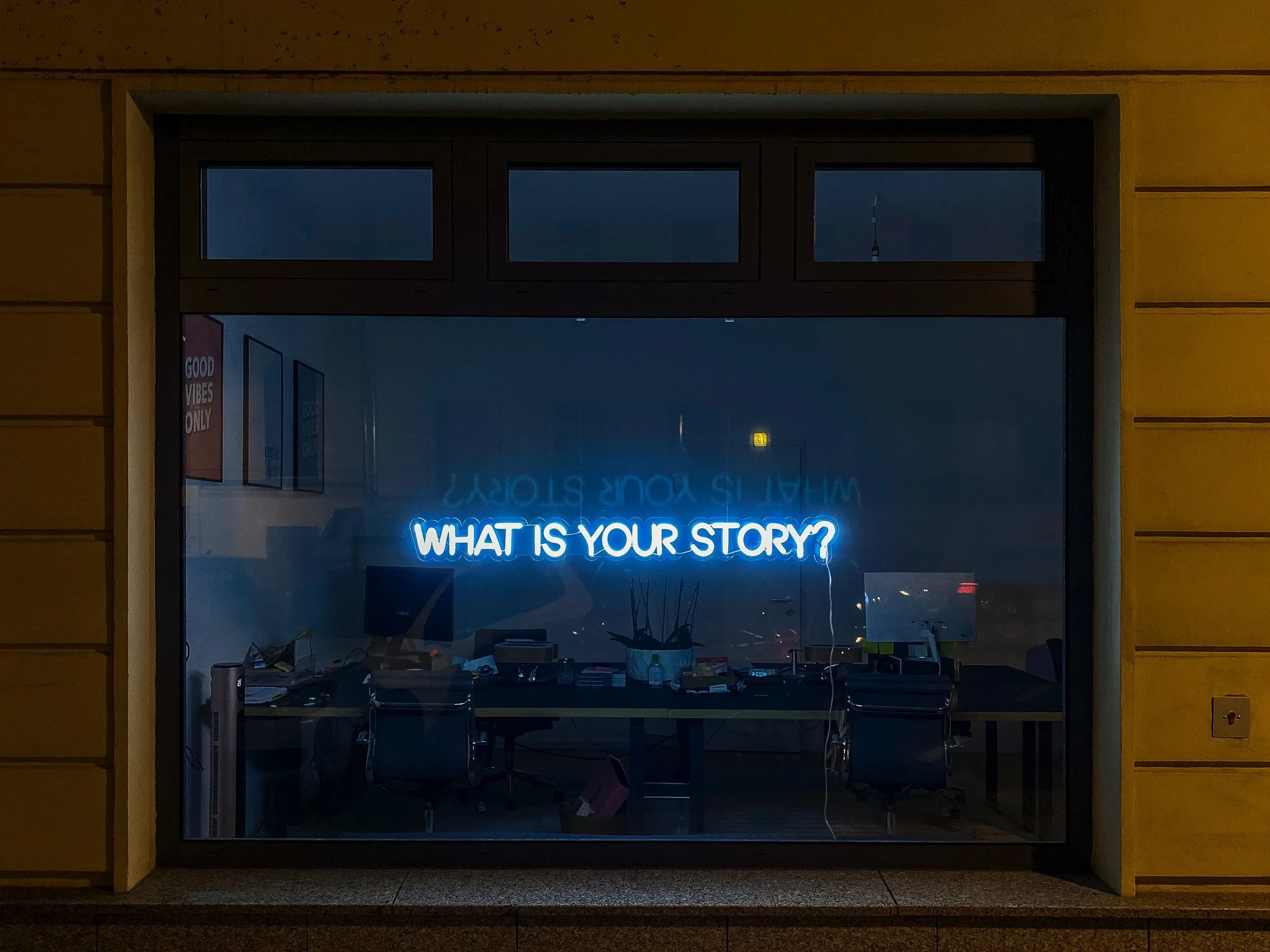
Image: Unsplash
Storytelling in business
I went to a networking event last week and a speaker brought her business to life with real-life stories of clients. She runs a charity called Silver Wishes which grants wishes to the elderly. These wishes are not trips to Disneyland but more practical and she recounted their gifting of an air-conditioning unit in peak Californian summertime to an elderly gentleman.
And look, I’ve remembered the story and I’ve remembered the company.
What turns a business case study into a story?
As they say, “It’s the way you tell ‘em.”
Provide background, set the scene
In that last example, the business owner told us that the man wasn’t able to move easily so spent much of the day in one room. It being Californian summer was a detail that didn’t need explaining but she emphasized that the man didn’t have any air conditioning which was a critical detail – we could all imagine how unbearably stifling and uncomfortable that would be. We were drawn in; we could empathize. We cared about the outcome.
And then + detail
The next step is walking through what happened next. This will likely be in chronological order given this is storytelling for business and not how you might structure a work of fiction. It’s important to continue providing details to connect with your audience such as how the client felt throughout or the questions they had.
This tool is also useful for helping your audience understand the process behind your product or service – how your product is easily purchased, delivered and simply installed for example. Or if it’s about commissioning me for your web copy, I can explain how collaborative it is to work with me, how I write and deliver the copy and how the feedback loop operates.
The (happy) ending
Every story needs an ending and yours should be a ‘happy’ one if you want people to engage with your business. Happy doesn’t need to mean that everything turned out rosy – for your business or service that might not always be the case – but your ending definitely needs to demonstrate the positive impact you had. A poor outcome with a dissatisfied client will not work!
Why is storytelling in web content powerful?
Real-life examples
As you can tell from the Silver Wishes tale, storytelling is a way to demonstrate real-life examples of your product or service. Reviews and testimonials are always valuable and the more detailed they are the better (why do you think businesses ask for all those in-depth reviews?!) but turning them into a story has even greater impact.
People reading or listening empathize with the characters. They might put themselves or others they know in that situation. Essentially, it gives potential clients a hook into your business and helps them see how they could use or benefit from it.
Memorable
Stories are memorable. Sure, we all remember fairy tales from our younger days and yes, we heard them on repeat, but the format of a story is something with which we’re all familiar: the ‘once upon a time’ to ‘and they all lived happily ever after’ formula is comforting and it sticks in our memories.
It makes sense, then, that storytelling for your business helps people remember your name or what you do, the service you provide and, perhaps, you as the person behind the business too.
Separating your business from the crowd
In a crowded marketplace, your stories could help to separate you from your competitors. They’re memorable and could provide a connection with potential clients, plus they’re an interesting way of expressing information.
Personal storytelling
I went to an event in Sacramento recently and there was a speaker, Jamie Perez, who’s the owner of Beyond Words Productions. She explained how telling her own, very moving story has opened many more doors and generated more business.
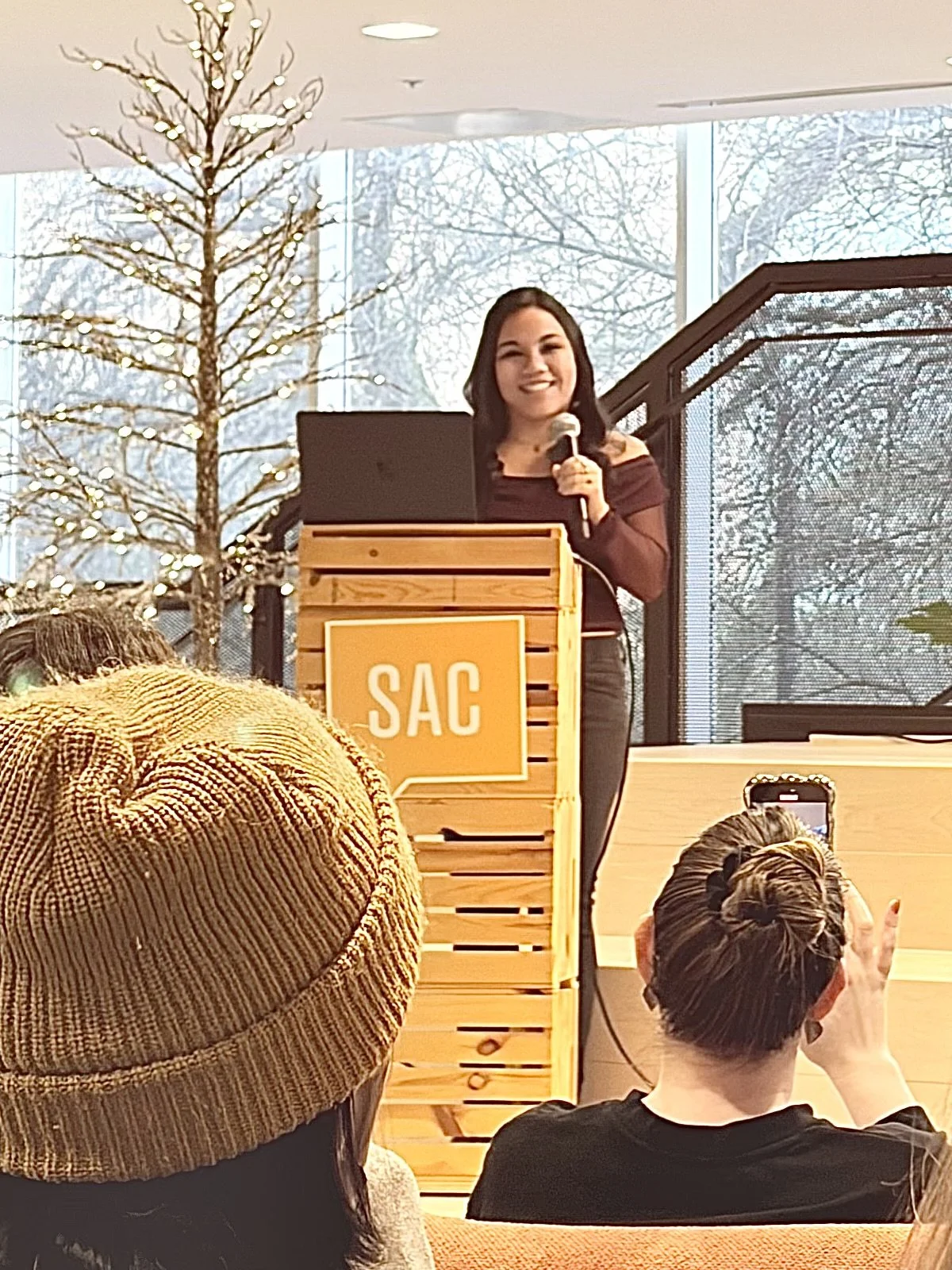
Jamie Perez at Creative Mornings, Sacramento. Luckily, she’s a far better photographer than me!
By showing her vulnerabilities and recounting her life story to date so eloquently, she connected with potential clients. She made herself unforgettable and provided a point of differentiation from other videographers and photographers.
I think Jamie has started opening up as part of the healing process, not for financial gain but the by-products have been so positive for her it seems. So, if it feels appropriate, telling your own story, warts and all, can be powerful for your business too.
Storytelling is an age-old method of spreading information and has always been a powerful tool for converting people from bystanders into followers. There’s no reason why you can’t use it for your business to
- Provide authentic examples of successful clients that are
- Memorable and
- Help you stand out from the crowd.
If you would like help turning case studies into stories or even telling your own story, please get in touch.